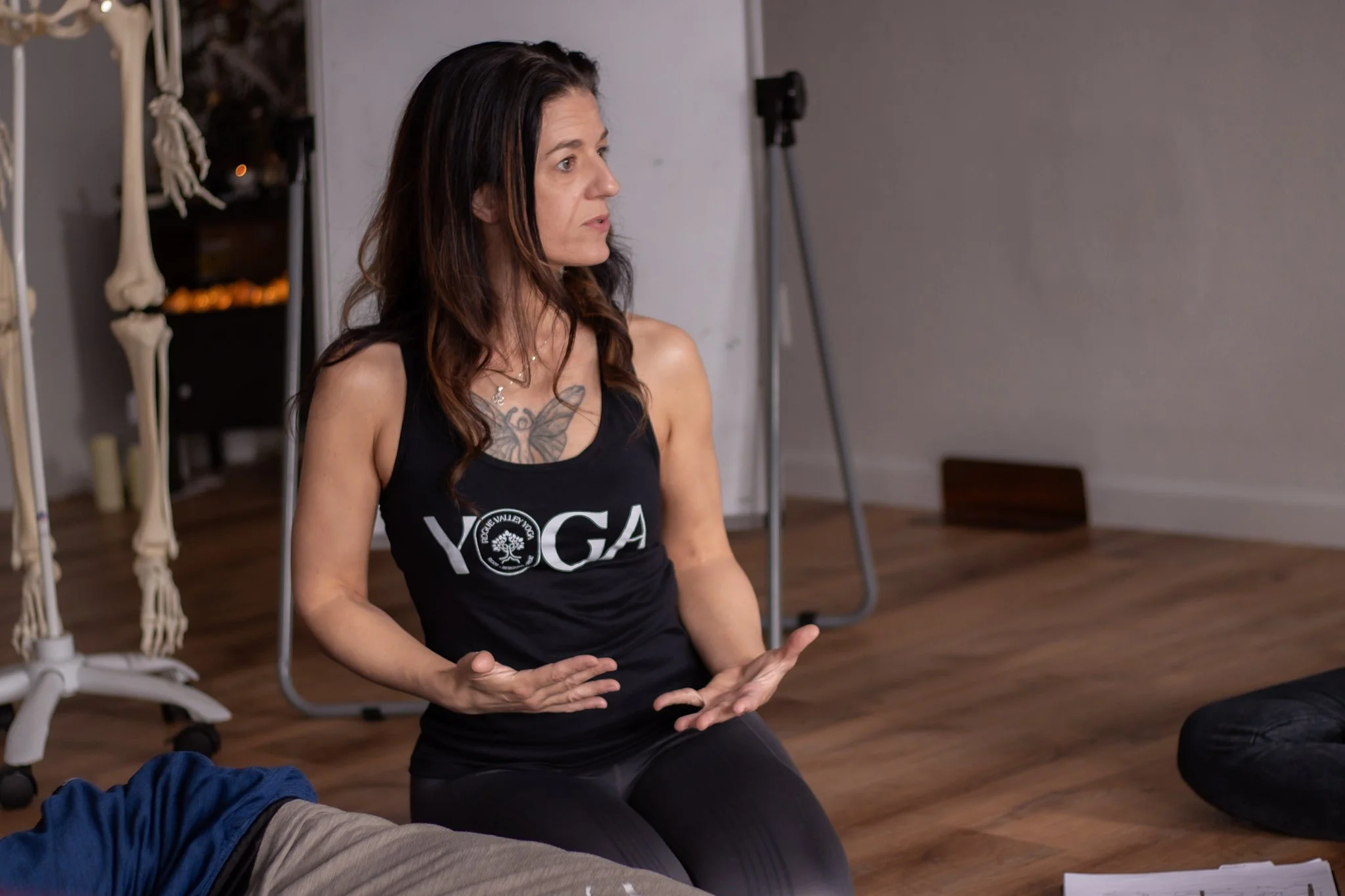
Sarah Sol
Yoga Begins Where Belief Can't Follow
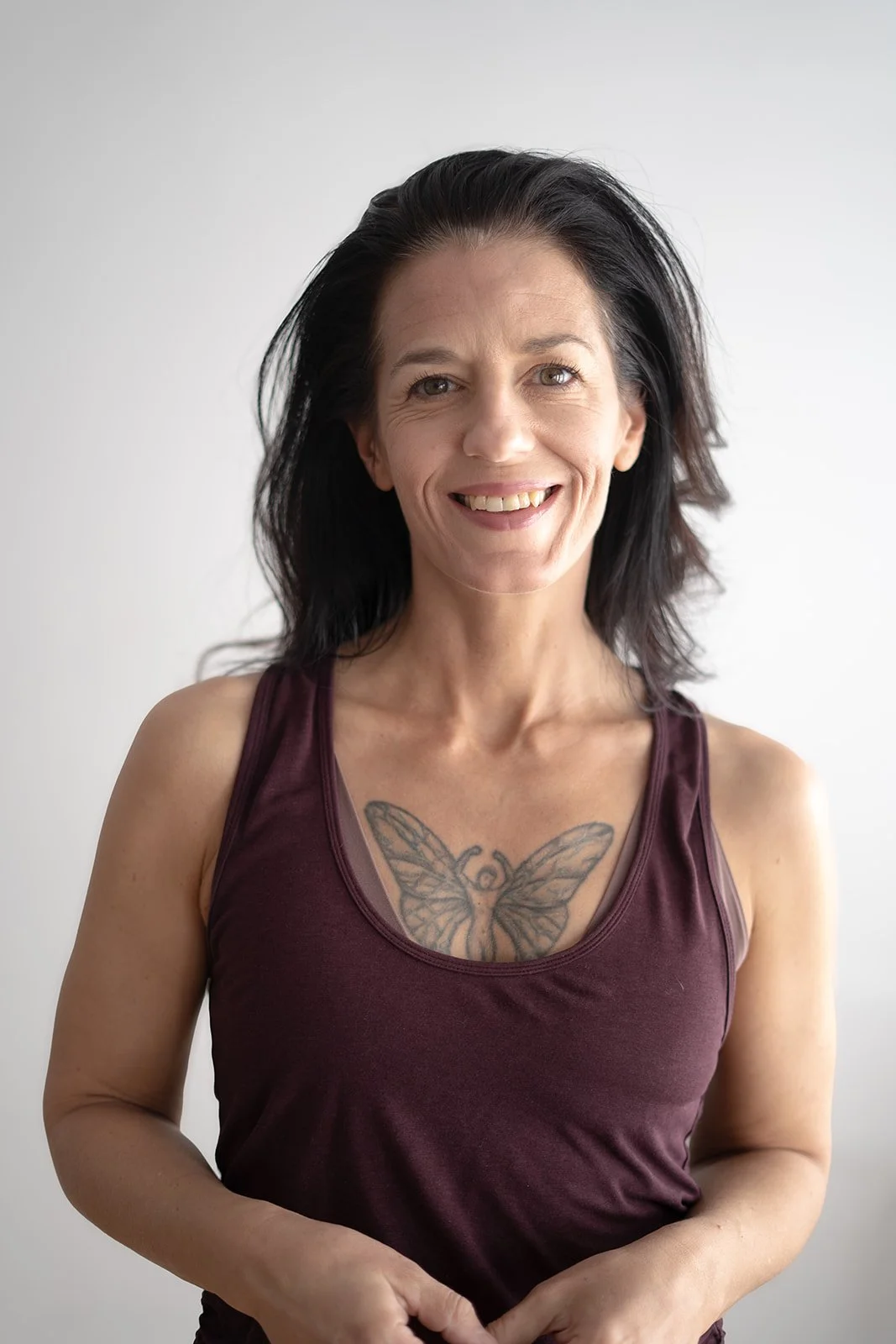
A portrait of Sarah Sol, a nonconformist yogic skeptic in pursuit of what can be known through experience.
Sarah Sol did not come to yoga looking for spirituality. In fact, she probably would have run the other direction if someone had told her that was where she was headed.
She came to it through acting.
Growing up in Connecticut, Sarah was drawn early to theater, particularly Shakespeare and repertory work. By her early twenties, she was in New York City, studying acting at the American Musical and Dramatic Academy and pursuing the work with the seriousness she brought to most things.
One of her acting instructors also taught yoga and began incorporating it into the actors’ warmups.
Sarah hated it.
Then she noticed what happened afterward.
Something about the practice changed her access to herself. Her physical, emotional, and creative landscape felt different. More available. She didn't have a framework for explaining it, and she certainly wasn't looking for one. She just knew she could feel a difference.
So she tracked the instructor down at his yoga studio.
Much to his dismay, she kept showing up.
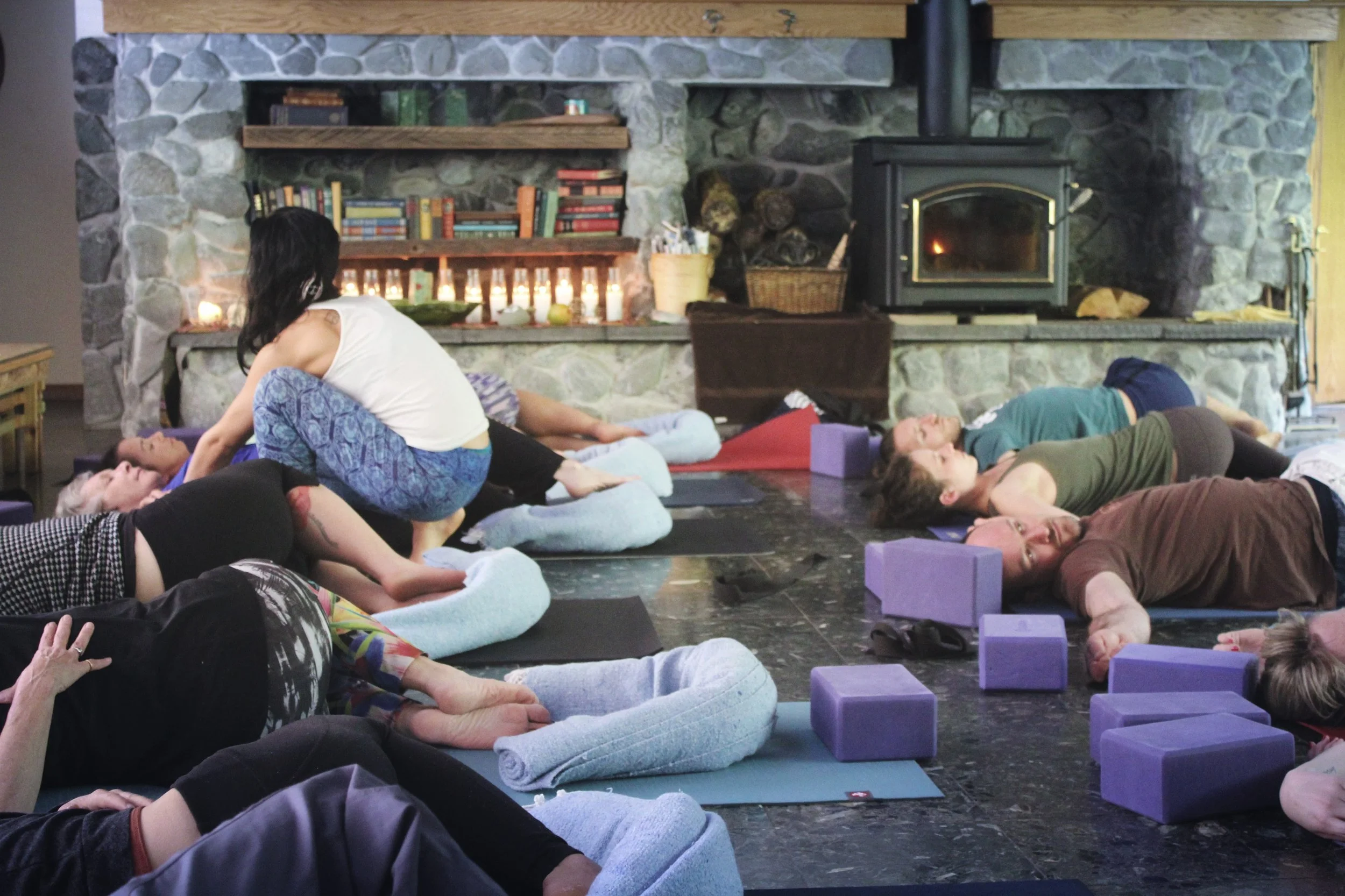
At the time, Sarah was a hardened atheist and skeptic. Yoga presented her with an inconvenient problem: something was happening that she couldn't quite explain away.
“It was like being unplugged from the Matrix.”
The question that followed stayed with her. Why did it feel as though something beyond herself could be accessed from within herself?
She became interested in the possibility that the body might provide access to something the intellect couldn't reach on its own. Not as an idea, but as an experience.
That distinction would become important.
Sarah had no interest in adopting a new belief system simply because it came wrapped in Sanskrit and incense. If yoga was going to mean anything to her, she wanted to know why it worked.
So she practiced. She sought out teachers around New York. She studied. She asked questions. She kept testing what she encountered against her own experience.
The practice gradually became less about accepting what yoga said was true and more about finding out for herself.
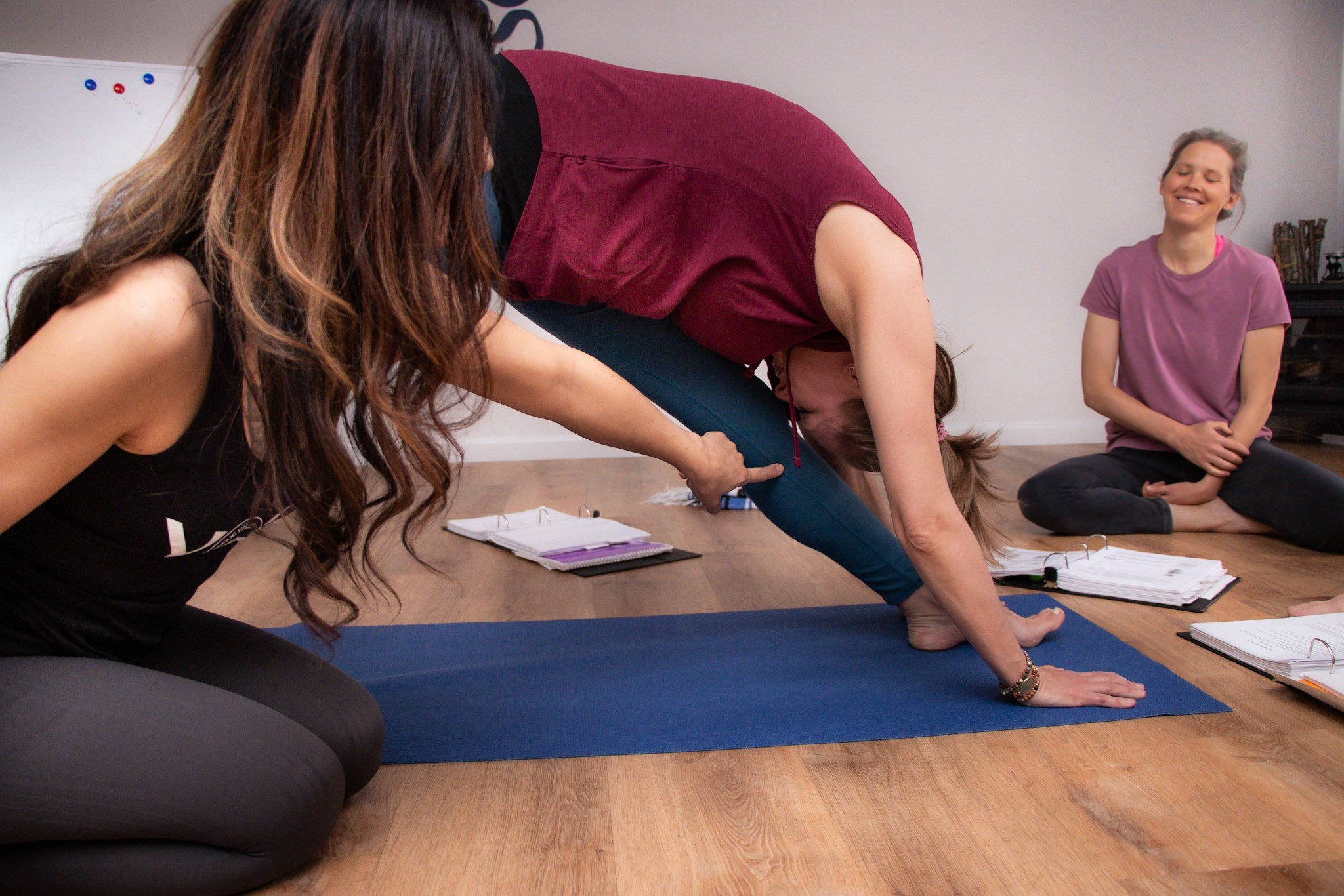
Teaching came somewhat accidentally.
One day, a teacher couldn't make it to class. Sarah had been there so often that someone asked her to step in.
She was overwhelmed. She did it because it had to be done.
In 2005, after being cast in a film, Sarah moved to Los Angeles with plans to pursue acting in film, television, and commercial work. It was a different world from the theater she had known.
There were auditions and waiting rooms and more auditions. She waited tables to support the process. She spent entire days sitting around casting offices, sometimes waiting only to be cut before she ever got in front of a camera. There were commercials, corporate videos, training films, the occasional line on screen.
There was a lot of waiting.
And rejection.
The machinery of an acting career demanded enormous amounts of energy while giving very little back. At times, Sarah describes it as a “bottomless pit of despair.”
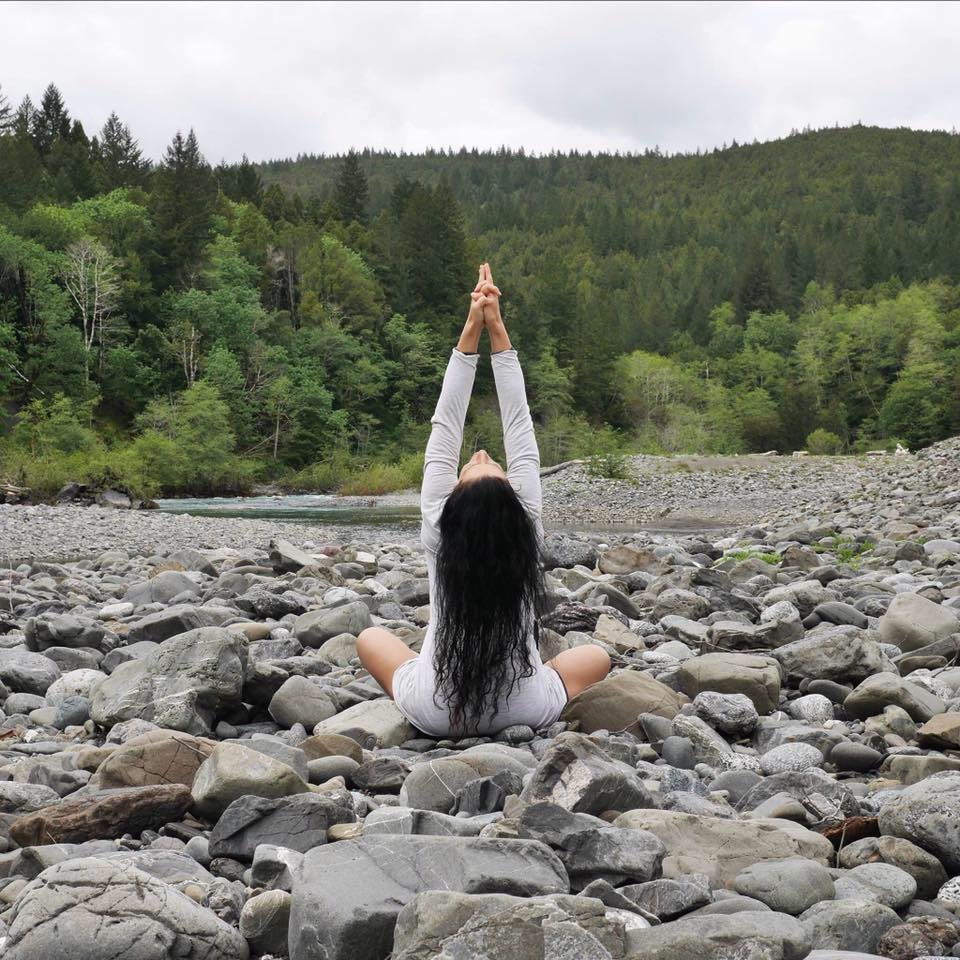
Yoga gave her something else.
Every time she put energy into it, something came back. She was learning. She was teaching. She was building relationships. She was becoming more herself.
In 2007 - 2008, Sarah was already teaching yoga full-time. The acting career was still technically there, but its hold on her was loosening.
In 2009, she worked with an eating disorder clinic, developing yoga programming for people who were in a deep state of desperation. The work brought her face-to-face with the body in ways that went far beyond posture or physical achievement. It also clarified something she had been moving toward for years.
She knew this was her Dharma.
By then, there were no distractions from it. Yoga wasn't something she was fitting into the life she was building. It was the life she was building.
That clarity mattered. She could stop wondering whether she should be doing something else and give herself fully to the work in front of her.
Eventually, that path brought her to Southern Oregon. She has been teaching here since 2014, building a practice that has expanded over the years into public classes, private instruction, mentorship, retreats, online teaching, and teacher training.
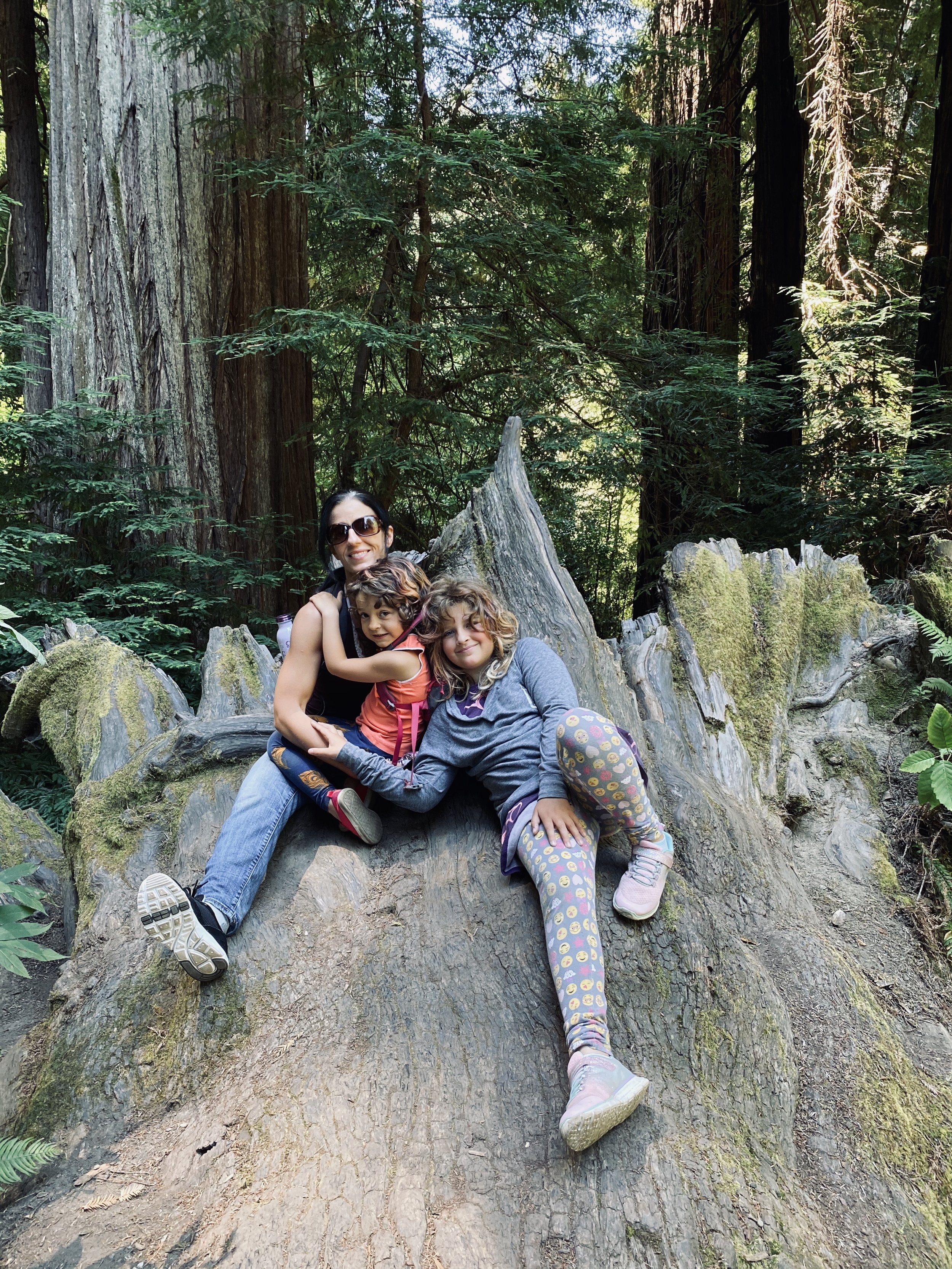
Then came 2020.
The pandemic closed studios and dismantled the familiar ways of gathering. At almost exactly the same time, Sarah's own body became a radically unfamiliar place.
Following emergency surgeries and a prolonged hospitalization, she came home profoundly debilitated. She had lost a tremendous amount of muscle and strength. Ordinary tasks became difficult. Carrying groceries was an accomplishment. Getting dressed could feel like an expedition.
She had two young children.
She had to figure out how to make her body work again.
Recovery required a different relationship with strength than the one she had known before. She needed to rebuild muscle, but she also had to learn how to recover. How much could she ask of the body? When should she push? When should she stop? How do you stay with discomfort long enough to learn from it without turning it into another thing to conquer?
Resilience became something she encountered at very close range.
It meant staying in the discomfort. Staying awake to it. Learning to respond without abandoning herself or overriding what her body was telling her.
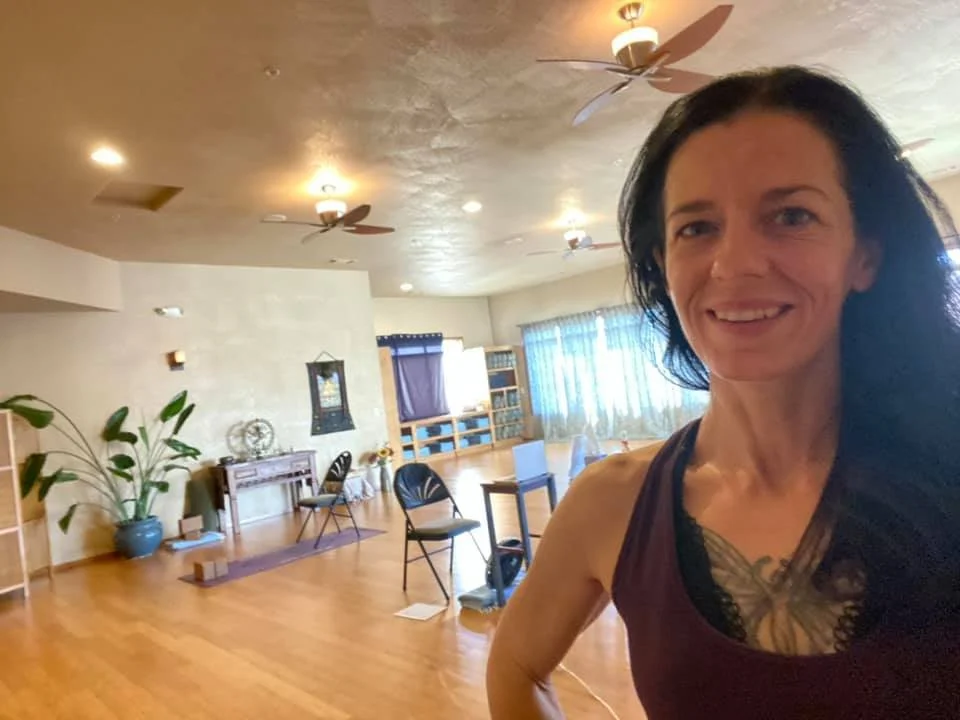
The experience turned much of what she thought she knew about strength upside down.
She had spent years with an intimate understanding of the body, including a complicated personal history with eating and exercise and two cesarean births. Now she was confronted with the very literal necessity of rebuilding muscle. For a while, the work was almost embarrassingly basic: build the body back up, give it what it needs, let it recover.
There was humility in that.
There was also a kind of freedom.
She learned what it meant to need help. To be unable to do things she had once taken for granted. To discover that a trip to the grocery store could feel like climbing Mount Everest.
And then there was the pandemic.
Sarah had always understood yoga as something best learned in real time, in a room with other people. There is something about being physically present with a teacher and a group that cannot be completely replicated through a screen.
But yoga adapts.
So Sarah did too.
She began teaching live Zoom classes and launched Sarah Sol Yoga on her own online platform. Much of her physical recovery happened at home, in isolation, while she continued teaching publicly online.
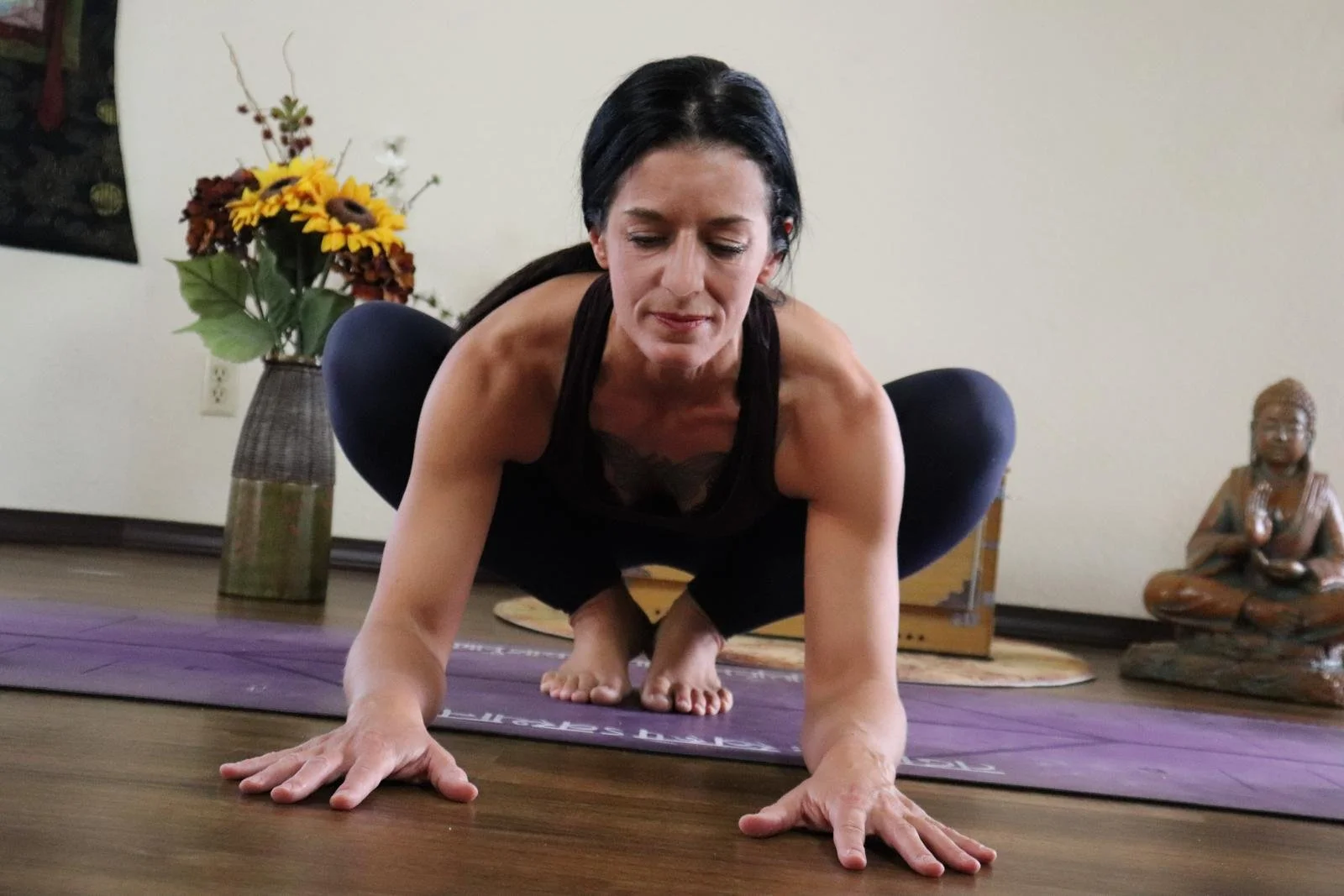
Her pandemic mantra became:
Yoga adapts. Keep it simple.
The phrase had as much to do with the world outside the yoga room as it did with yoga itself.
Suddenly, everything required a decision tree.
Who was going to be at the house? Did everyone have sanitizer? Did the kids have masks? Were they N95s? Who was vaccinated? Who wasn't? Had someone been exposed? Did you need a test? Had enough days passed since the exposure? Could you eat at a restaurant? Indoor or outdoor? Where could you go?
Everything seemed to come with a billion freaking questions.
Against that backdrop, simplicity became precious.
Yoga had to adapt, but it also had to retain a path to the thing underneath all the noise. The point wasn't to create another complicated system to navigate. Yoga was the means of getting back to what was important and valuable.
In order to get there, they had to keep it simple.
The simplicity was not an aesthetic. It was a way through.
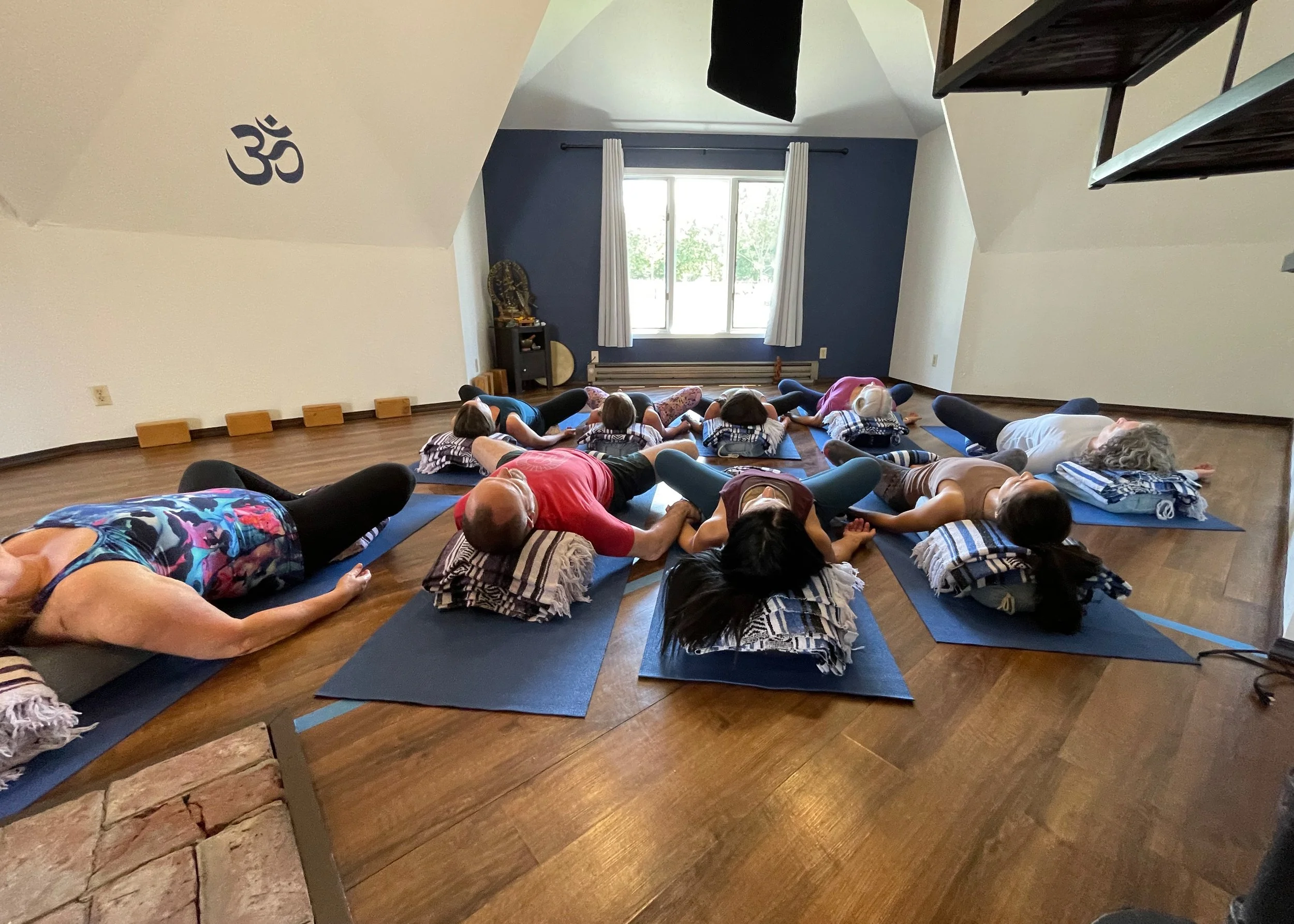
And perhaps that was part of what yoga had been teaching Sarah all along: circumstances change. Bodies change. Plans change. The ground shifts beneath you. The practice has to be able to move with it.
As soon as it was possible, she began renting spaces and bringing people back together in person.
It was harder than it sounds.
People had spent months, and eventually years, living with isolation, fear, grief, uncertainty, and very different interpretations of what had happened to them. Reconnection was not a switch that could simply be turned back on.
It was like water in a desert.
It was also, Sarah says, a lot like pushing a moose up a hill.
Still, people came.
And something became clear: they weren't only coming for yoga.
They were coming to find themselves again. And they were coming to find one another.
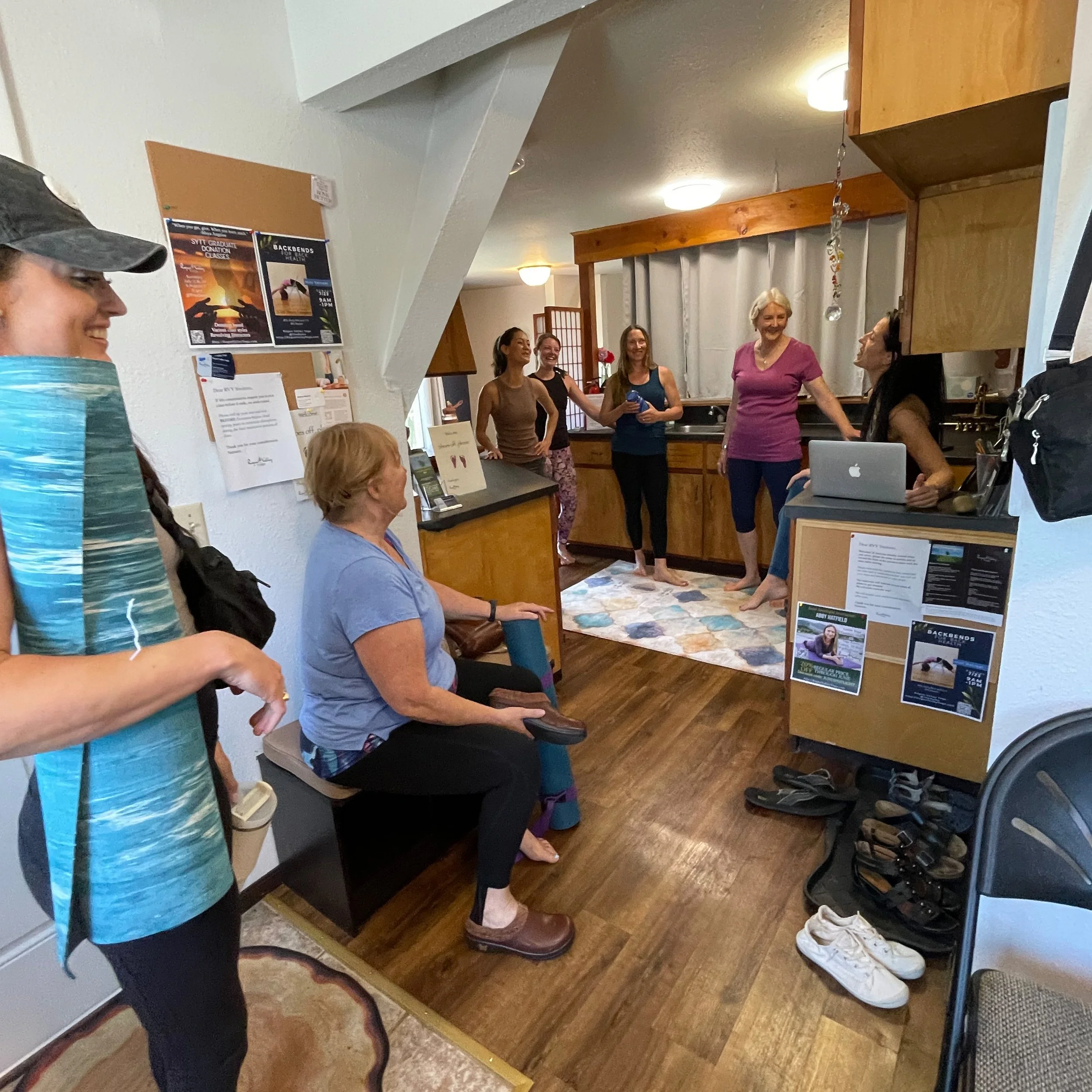
That realization eventually became Rogue Valley Yoga.
In 2023, Sarah opened the studio in a geodesic home she called The Dome. It was cozy and intimate, with a fireplace and the unmistakable feeling of being in someone's home. It wasn't trying to look like a yoga studio. That was part of its charm.
For a while, it was exactly the right place.
People began to find their way back into one another's lives. They practiced together. They talked. They laughed. They disagreed.The phrase Sarah put on the wall was simple:
There's room for you.
At a time when so much public life seemed organized around deciding who belonged on which side of which line, the phrase carried more weight than its five words suggested.
There was room for disagreement. Room for uncertainty. Room for people who didn't have everything figured out.
Sarah often returns to something Maya Angelou wrote:
“If it’s of a human, it cannot be alien to me.”
For a yoga studio, that is a surprisingly radical premise.
It doesn't require agreement. It requires staying in the room.
It asks people to remain curious about one another long enough to get underneath the opinions, identities, and assumptions and find the place where the human experience becomes recognizable again.
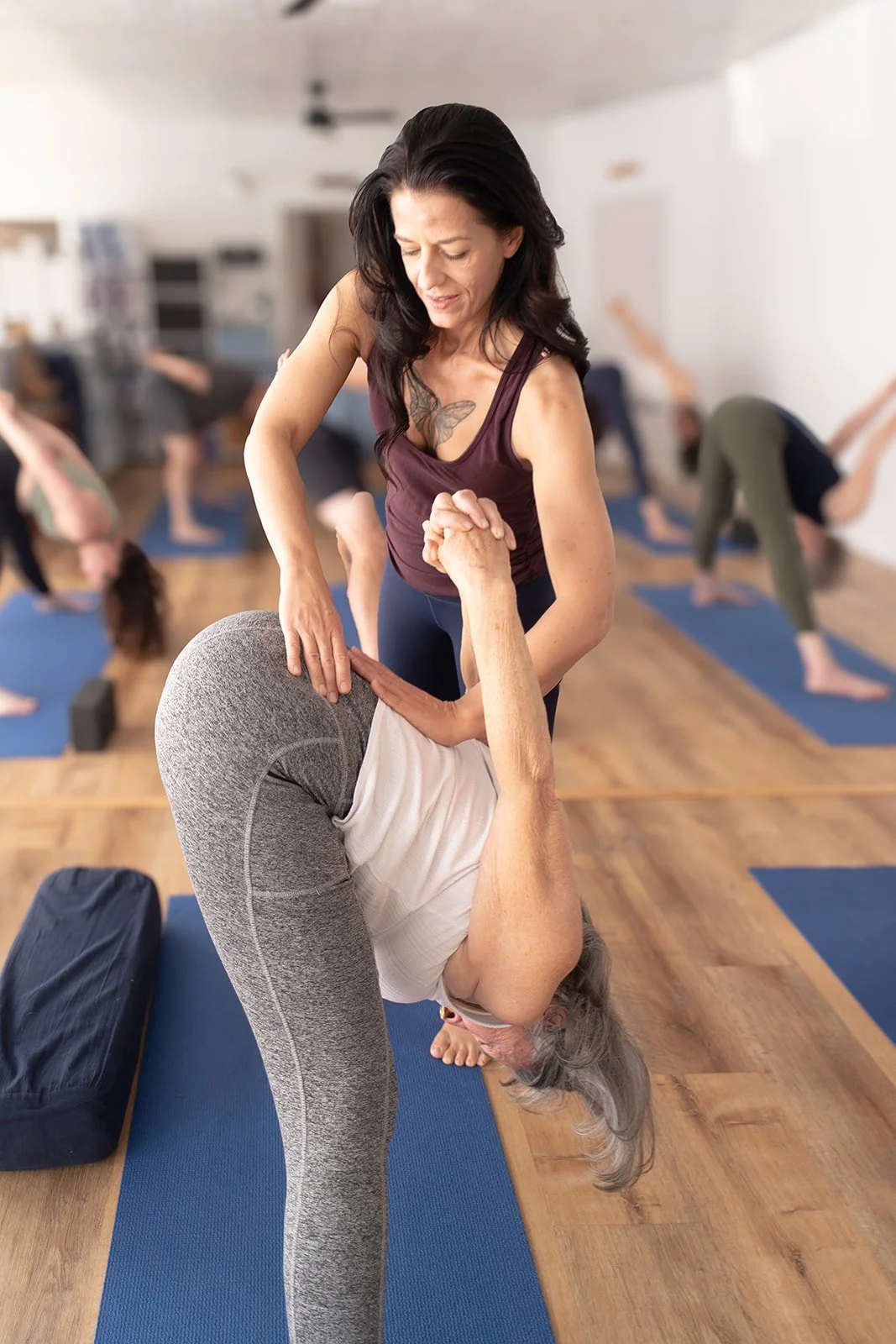
Eventually, the community outgrew The Dome. In 2025, Rogue Valley Yoga moved to its current location at Hersey Business Park. Leaving The Dome was bittersweet. It had served its purpose. The new space was another chapter, and with it came another phrase:
Root. Rebound. Rise.
The words became part of the studio's identity, along with the Tree of Life that represents it.
For Sarah, the phrase is less a slogan than a description of what she has spent the last several years doing.
Root into what matters.
Rebound when the ground changes.
Rise carrying what you learned.
Her understanding of strength has changed along the way.
She no longer sees strength simply as the capacity to do more. Strength is the ability to engage with intention, release completely, and recover well.
That idea runs through her teaching now, particularly in the work she has developed around strength and healthy aging. The body is something to work with, not something to wage war against.
Trust, too, has become central.
It develops through practice. Every intentional movement builds competence. Competence becomes confidence. Confidence creates the conditions for trust.
There is nothing particularly new-age about that progression.
It is experiential.
Which brings Sarah back to the question that started all of this.
She is still a skeptic.
Not the kind who has decided that nothing is true, but the kind who is reluctant to call something true simply because someone says it is. Belief, to Sarah, can become loyalty to an opinion. Once we become attached to what we think we know, we can stop seeing what is actually in front of us.

She would rather keep looking.
It is one reason she remains somewhat of a nonconformist in an industry that has become increasingly adept at packaging yoga into products, programs, identities, aesthetics, and easily digestible promises. The commercial yoga world has made the practice accessible to millions of people, but in the process, some of its deeper questions can get buried beneath the merchandise and marketing.
Sarah remains interested in those questions.
What happens when we pay close enough attention to actually notice something?
What can the body teach that the intellect cannot?
What happens when an assumption no longer survives contact with experience?
What is left when we stop trying to make the experience fit what we already believe?
These are old questions. Yoga has been asking versions of them for thousands of years.
Sarah's contribution is not that she has finally answered them.
It is that she has remained willing to ask.
Yoga, for her, is an investigation. The body is part of the laboratory. Practice is the experiment. Experience is the evidence.
There is always another question.
Another assumption to examine.
Another thing to experience directly.
Yoga begins, perhaps, where belief can't follow.
And Sarah Sol is still willing to go there.